
Your Cart is Empty


- Blowout Deals
- ON SALE
- Balls
- Bags
- Shoes
- Accessories
- Gift Cards
- Blog
- search
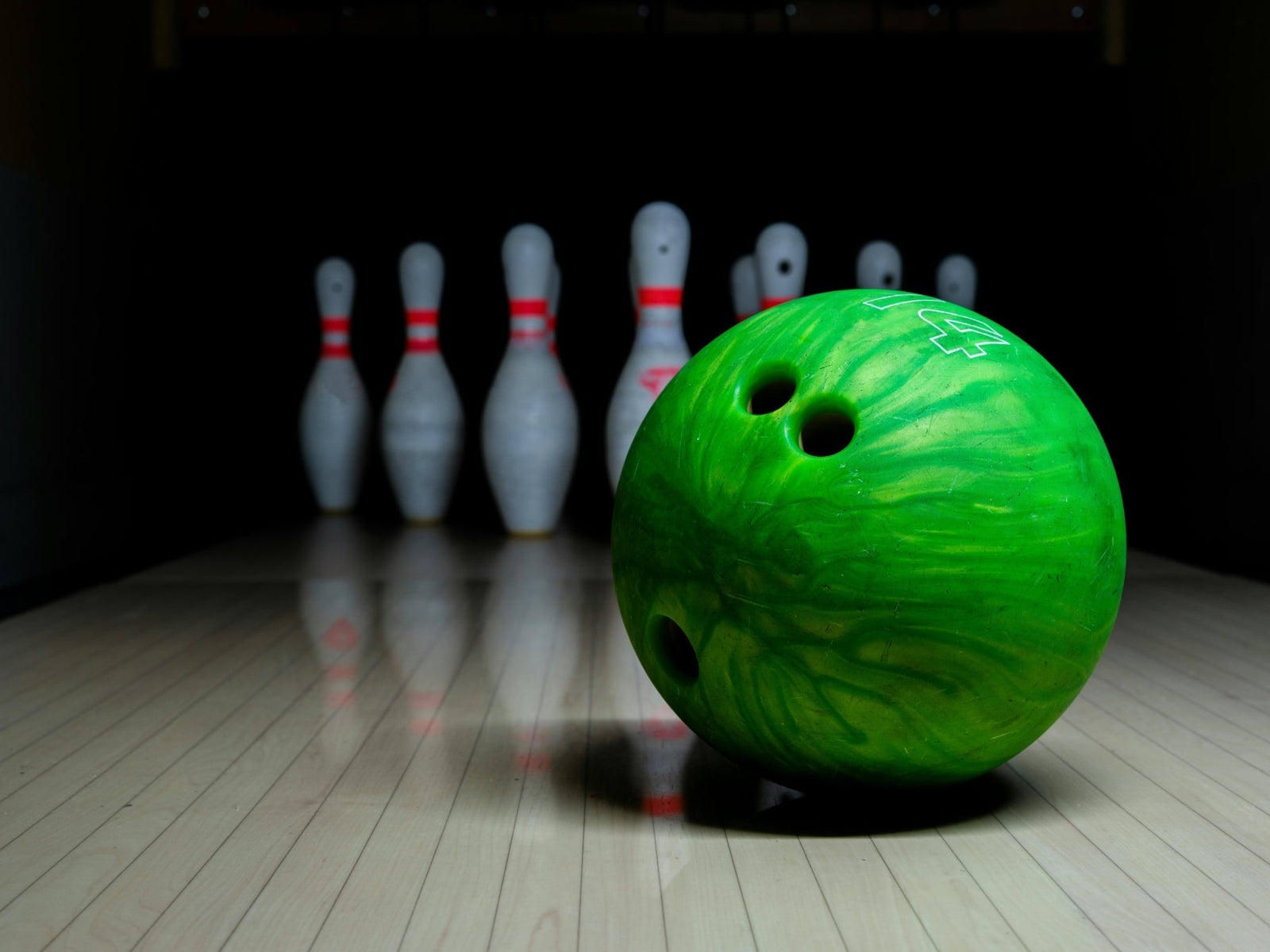

You release the ball from your fingertips, praying to the bowling gods for a strike. But you get the opposite.
You strike out.
The white and red pins at the opposite end of the lane seem to glare teasingly at you, daring you to try again. You hesitate, as you can’t seem to get your ball to stop curving so early and harder than you’d like. Rather than gliding smoothly toward the pins and gently turning into them, the ball grabs the bowling lane, jerks to the side, and totally misses.
It’s like the ball has its own mind.
This common problem, where the ball “hooks” too much, can happen for several reasons. Let’s explore why your bowling ball is hooking too much — and what you can do about an over-hooking bowling ball to finally put those pins in their place (face down on the floor).
A bowling lane’s “heads,” or first part, should be oiled to allow bowling balls to slide before they begin to turn easily. If this section of the lane dries out, your ball could experience friction immediately, as the lane grabs it rather than allowing it to glide. It’s much like a bowling ball hitting friction on a carpet as opposed to gliding along a tile floor. A bowling ball hooking too much can easily happen during bowling sessions since a lane could change over a span of several hours, causing what worked for you one time to stop working suddenly.
The fix for an over-hooking bowling ball? If you’re right-handed, shuffle your feet around three to five boards left while maintaining the same target. You could also replace your ball with one that naturally glides more if you have one available.
Your bowling ball’s outer shell, called the coverstock, may be designed to grip bowling lanes aggressively. Balls are just like tires, as they have different gripping capabilities: a racing tire grips hard, while a regular tire grips less. If your ball’s coverstock is strong and the lanes you bowl on are lacking oil, your ball will stick, or hook, instantly. A bowling ball hooking too much due to a strong coverstock is a common issue for new bowlers, who typically buy expensive balls while not realizing they’re made for lanes containing heavy oil, versus your typical house lane.
The solution for an over-hooking bowling ball? Go with bowling balls with weaker coverstocks. You could also polish your existing ball to help it glide farther before it starts hooking.

You can sand a bowling ball to various grit levels. A level of 1000 or 500 is low and feels like sandpaper, while a level of 3000 to 4000 is high and feels smooth. Rough balls can dig into lanes early, especially when the lanes have light or medium oil.
Your seemingly smooth ball may become rough over time due to regular cleaning, dirt, and oil, leading to early hooking. Consider resurfacing your rough bowling ball to a grit level of 4000 or 3000 to keep the ball gliding longer and prevent it from hooking too much.
You release your bowling ball, and you notice that your hand is around the ball’s side. This position creates what’s called an axis rotation, or a side-spin, which can cause a ball to hook sharply. This subpar position is common among new bowlers, who often turn their hands too early or accidentally twist their wrists. Even a tiny twist may cause too much hook once the ball comes into contact with friction.
Fix this over-hooking-bowling-ball problem by fixing your position: Make sure your hand stays behind the bowling ball longer. Then, release the ball as though you’re shaking somebody’s hand. This minor adjustment can help decrease side-spin issues, smoothing out your hook.
Your bowling ball may be hooking too much because it isn’t moving quickly enough. Faster balls skid longer before they hook, as friction doesn’t have as much time to hamper them. Even if you spin your ball aggressively, it’s not enough to overcome a slow speed.
You may find yourself inadvertently slowing down while bowling due to concentrating heavily on your aim. Don’t. Increase your ball’s speed by standing slightly farther back, loosening the swing of your arm, or allowing gravity to pull your ball rather than trying to muscle it down the lane.
Let’s say your bowling ball readily absorbs oil. Over time, your ball’s pores will fill up, causing the bowling ball to start hooking too much. It could begin hooking too early, too sharply, or too late.
Prevent this problem by cleaning your ball following each session. Deep oil extractions, also called rejuvenations, done every 50 to 75 games, can also help remove excess oil so your ball starts gripping the lane consistently again.
Another reason why your bowling ball might be hooking too much is that your thumb may be leaving the ball’s hole too quickly since the hole is too big or slick. Your ball may start spinning too early as a result. Bowling tape placed inside the hole can help tighten your thumb’s fit, so it exits smoothly rather than too quickly.
For 25 years, Bowlers Paradise has been a leading provider of everything a bowler could need. Whether you’re searching for high-performance or entry-level bowling balls for sale, we’ve got you covered. We offer balls from well-known brands, and traditional drilling and engraving options are available. Browse the latest designs and bowling accessories, and shop now!

Comments will be approved before showing up.
