|
|
Bowling shoes are the foundation
of the game. When someone goes to the counter to rent shoes, they
are not asked if they are right-handed or left-handed. They are
just given a pair of shoes. This is because both shoes have the
same sole so that either-handed people may use them. To be effective,
you must have your own shoes. That means none of those $50 rental
shoes you can buy…
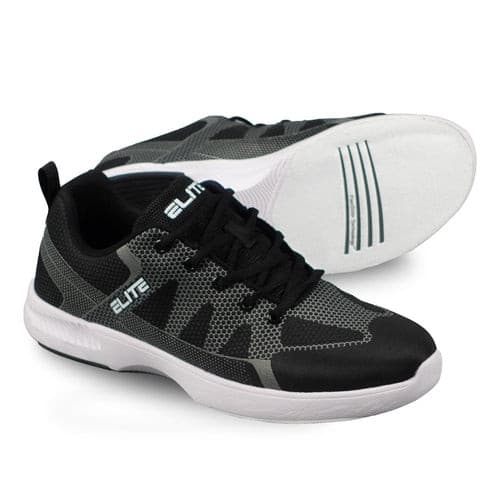
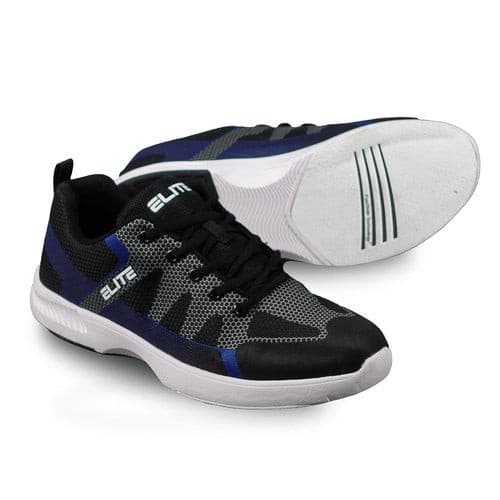
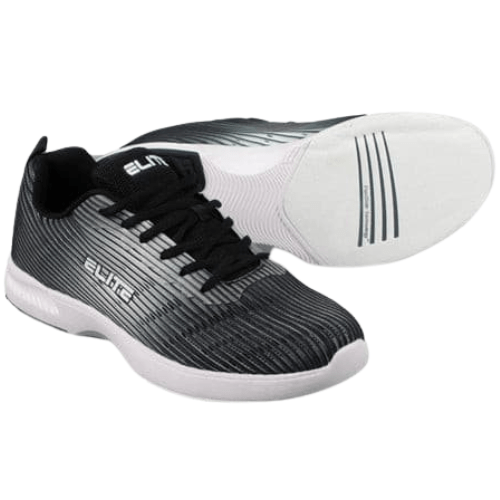
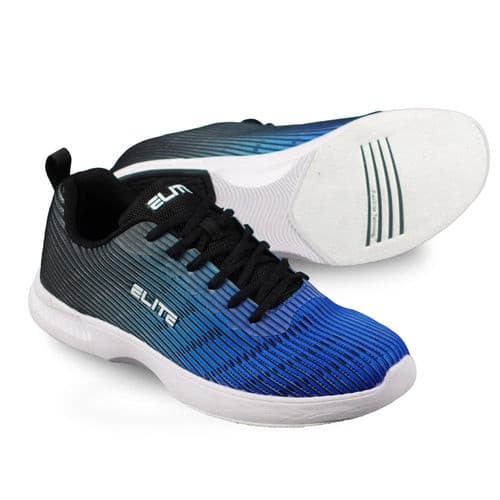
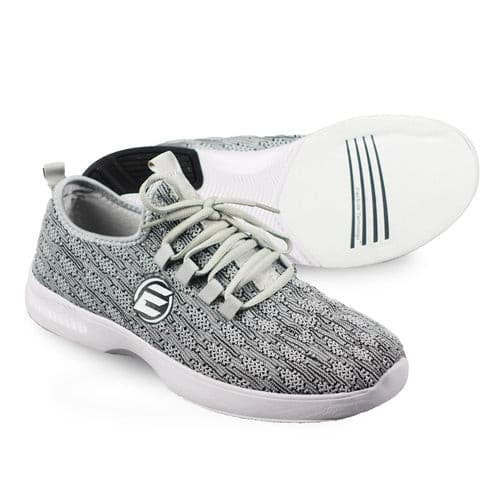
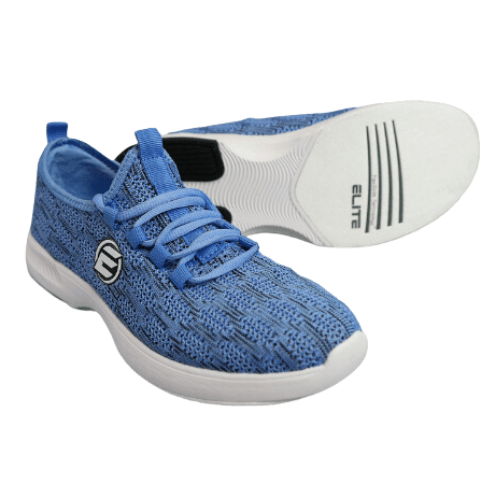
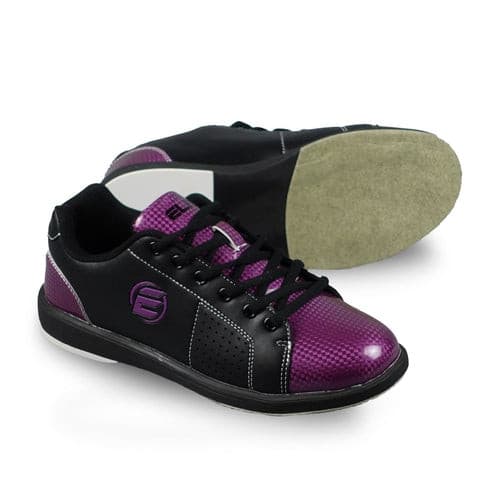
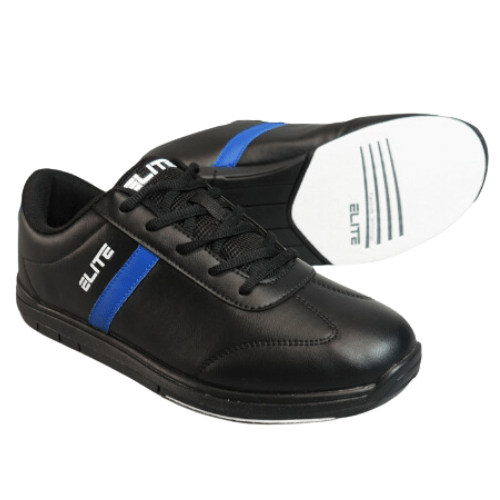
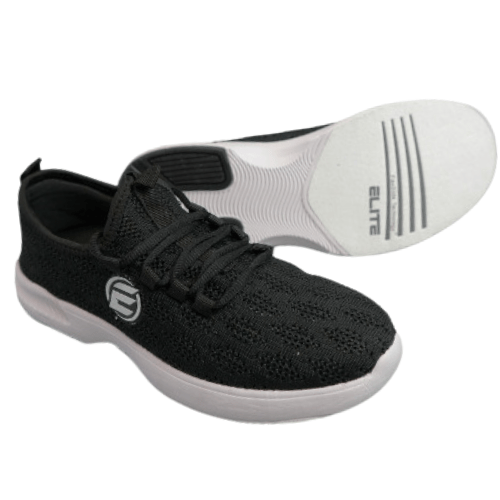
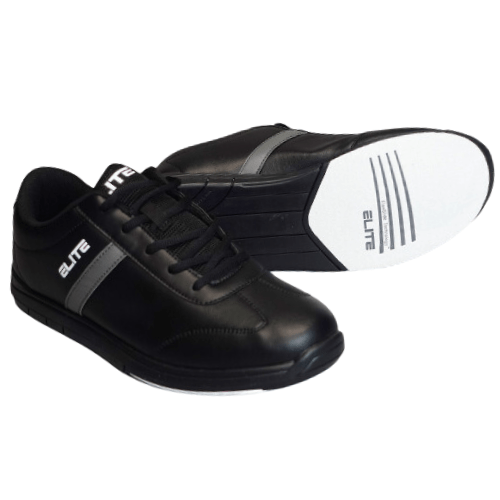
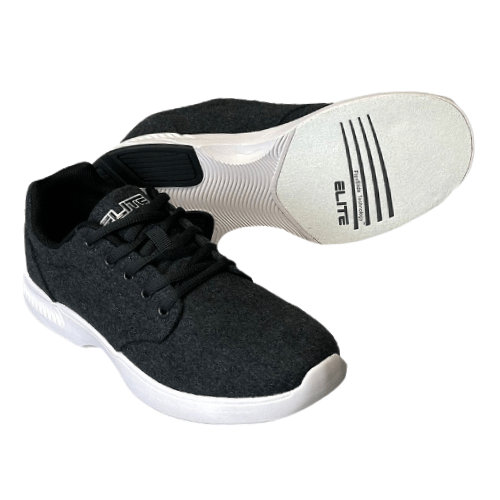
Real bowling shoes have different soles on each - one sole that
slides and one that doesn't. For right-handers the left shoe should
have a sliding sole and the right shoe a traction sole. You know
from your experience that the next-to-last step is the power step.
There must be a sole on this shoe which allows for traction so that
you can really push off on that power step and drive into the slide.
Shoes are so important in fact, that if you had to decide between
buying real bowling shoes and buying a bowling ball, the choice
would be shoes. (Keep this in mind if you are considering shoes
for a younger player: if she is still growing and purchasing bowling
shoes would require replacing them frequently because of that growth,
a ball might be the better answer. A ball can always be plugged
to accommodate that growth but you can't add on to the shoes!)
However, you can't wait until a young bowler stops growing to get
bowling shoes. The importance of having her own shoes is in the
traction sole. Don't hesitate to put that foot in a tennis shoe.
It is not illegal and will provide her with the stability to drive
into the shot. She'll also be able to get used to the feel of a
shoe that does not slip out from under her as rental shoes or shoes
without a traction sole will. You can also take the sliding shoe
of a pair of basic canvas tennis shoes to a cobbler and have buckskin
put on it. That will provide her with a sliding sole while not being
as expensive as bowling shoes.
CHECKING APPROACHES
You must check your shoes and the approaches every time you prepare
to bowl - practice or competition. If the sliding sole is not kept
free of any wetness or dirt, a smooth slide cannot be achieved.
Indeed, serious injury may occur. If someone has 'burned rubber'
or left any residue from their shoe on the approach, you need to
know that. You can never assume the approaches are okay.
You'll see folks checking approaches in some interesting ways. Some
tentatively put the foot on the end of the approach and move it
forward and back a couple of times. That's a great place to check
the bottom of the shoe to see if anything might have gotten on it
but since sliding doesn't occur there, is a pretty ineffective way
to check approaches. After all, you check an approach to test both
your shoes and the approach surface.
Some start at the end of the approach and run toward the foul line
to see if they'll be able to slide. Duh! What if they can't? They'll
realize the error as soon as they regain consciousness out by the
arrows.
If you have ever arrived at a professional tournament before the
competition begins you will always see the pros checking approaches.
They do not want to be surprised by how approaches are behaving
nor do they want to chance an injury.
Here's how to quickly and effectively check approaches:
Stand in the middle of the approach about 3' - 4' behind
the foul line. You are assuming you'll be sliding somewhere around
the middle of the lane. WITH YOUR RIGHT FOOT ALWAYS ON THE FLOOR,
bend your right knee and slide the left foot toward the foul line.
There are several important points here. When you slide for real,
your whole body is over your sliding foot. Therefore, to test approaches
you cannot just stand upright and delicately slide your foot forward
and back a few inches with no pressure on the foot. That is not
how you slide and it should not be how you test approaches. Slide
your whole body forward on the ball of your foot and then apply
pressure to the heel to brake like you really do. Anything less
encourages bad information and won't give you a true read of how
the approaches feel. "
Move to the left and slide at a slight angle toward the right
corner of the deck with the foot between 25 and 35. This is approximately
where you'll be sliding for right side spares. This is especially
important on synthetics approaches. If there is a seam, be sure
you test the feel of sliding across it. " Move to the right and
slide at a slight angle toward the left corner of the deck with
the foot between 12 and 17. This is approximately where you'll be
sliding for left side spare conversions. Just in case you get to
play the ditch, you'll also want to slide around 10 with your foot
going in the same direction as the boards while you are out here.
"
The right foot MUST stay on the floor. Do not take a running
start to see if you can slide. If there is something on the approach
or on your shoe and the right foot is not in contact with the floor
to protect your balance, you could fall. Don't take the chance.
Do it right. "
Once that approach at the foul line has been checked, you're
not through. You want to slide into your starting position as a
way to check the sole before each shot. If you saw the television
broadcast of the PWBA event from Omaha a few years ago, you'll probably
remember that Michelle Feldman fell due to a piece of tape being
on the bottom of her shoe. Risky.
CARE AND FEEDING OF THE BOWLING SHOE
Taking care of your bowling shoes is as important as taking care
of your bowling balls. They will last longer and most importantly,
will help prevent injury rather than cause one.
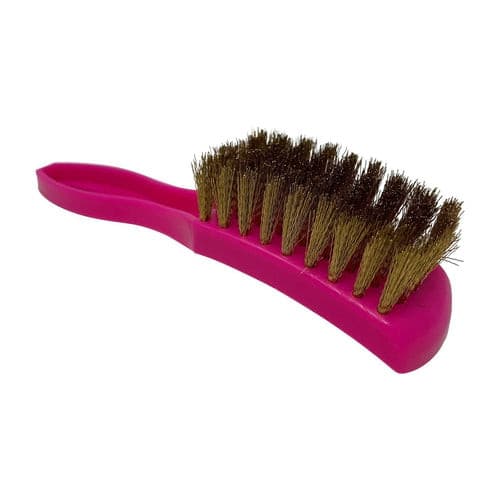
Use a steel brush to clean the bottom of the sliding shoe.
You should always have that brush in your ball bag. The brush can
also be used to achieve more slide or less slide. If you brush heel
to toe, you will have more slide. If you brush side to side across
the sole, you will have less slide.
You won't believe this one but it works. Give it a try. If
you are not sliding as much as you'd like and you're sure it's not
the approaches and it's not your shoes that are the problem, tighten
the entire lace on your sliding shoe. If you're sliding too much,
loosen it.
Stay in the bowler's area. Many centers are carpeted. You
cannot always see a hazard (such as a wet spot) on carpeting. If
you accidentally get your sliding foot wet, not only will you not
be able to bowl; it takes lots of time and work to get the shoe
dry enough to use again.
There are several products on the market people sometimes
use on their shoes to achieve slide. Without exception, they are
not legal for use on the shoes. (Rule 12). Anything that could possibly
interfere with another bowler's ability to execute a shot is not
legal. If you use or depend on these powdered aids to help you keep
your feet and you are forbidden to use them, it can affect not only
your execution but become a weapon in the mental game for your opponent.
Whether it is affecting their shot or not, they can insist that
you be prevented from using the powder or cigarette ashes or soapstone,
or whatever, and you'll have to stop.
Certain types of carpeting can cause static electricity.
This can cause you to stick at the foul line. It's just safer and
makes more sense to stay in the uncarpeted and safe bowler's area
where food and drink are not allowed and the danger of something
being on the floor is reduced. Sometimes, however, that static electricity
can be a good thing. If you need less slide at the line, rubbing
the sole of the sliding shoe on the carpeting can create enough
static electricity to help you not overslide.
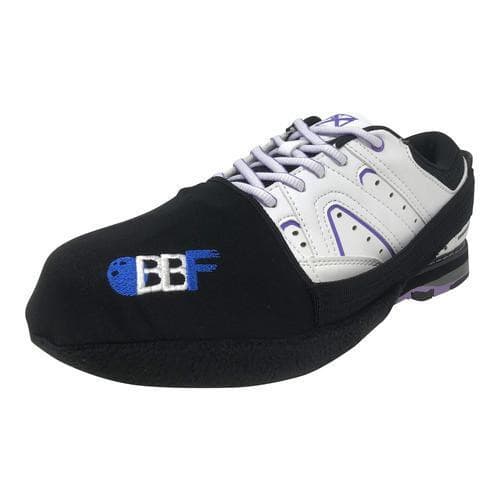
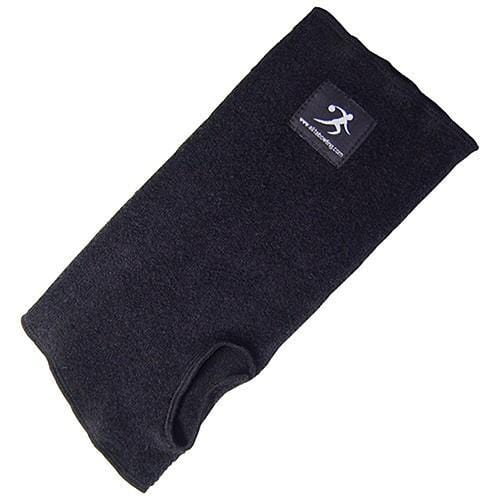
There is a product on the market that is effectively a sock
for the sliding shoe. Those who wear it say they are not affected
by slippery or tacky approaches. It fits over the sliding sole and
the top of the shoe and is held in place with elastic at the heel.
Your pro shop partner should be able to get them for you.
There are shoe covers designed specifically for bowling which
are easy to get on and off the shoe. Make sure you have a pair and
use them anytime you leave the bowler's area, especially to go into
a bathroom or snack bar where the floor is more likely to be wet.
THE BOWLING SHOE AS A FASHION STATEMENT
There are several types of shoes in the game today which allow you
to change the sole of the sliding shoe to be compatible with the
surface of the approach. Sometimes you will need to slide more and
sometimes less. These types of shoes allow for either. The entire
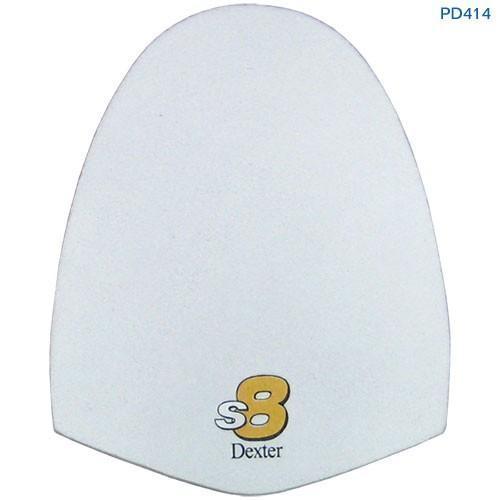
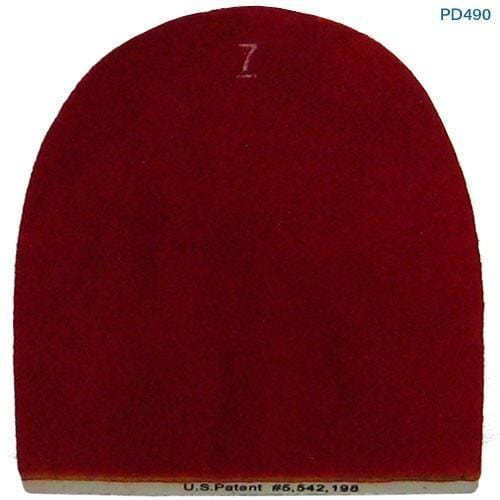
sole and/or heel of Dexter® brand shoes can be exchanged with different
combinations and Linds® shoes have small round disks that allow
you to use different combinations of material to get just the right
amount of slide for the condition. There are other brands as well
but these two will serve for the purposes of this article.
Each brand comes with a description of the various uses of the soles.
They are attached to the shoe with Velcro® and the Velcro is color-coded
to make the proper exchange easier. Dexter's also have different
types of heels that can be changed out. The heel of the sliding
shoe is the brake. It is usually made of rubber to enable the bowler
to stop the slide. The Linds heel has three holes for the different
types of disks available for braking. Linds has up to four holes
in the sole for the numerous disks available for controlling the
slide. There are many types of sliding disks and therefore many
different types of combinations to allow for the perfect slideability.
Understanding what each type of sole or sole combination or sole/heel
arrangement does to you or for you is critical. If you need more
slide or more brake, you must understand how to determine that and
what combinations of soles and disks achieve that slide or brake.
With the Linds disks, mixing and matching disks for the perfect
combination is possible. You should know that if you slide on the
outside of your left foot and you are not sliding well, perhaps
you need only to exchange the disk on the outside of your shoe rather
than all four of them. If you use Dexter, the entire sole must be
changed.
Dexter's have a lower heel than Linds and therefore require more
applied force for braking than the Linds shoe. If you are familiar
with the higher heel of the Linds shoe and switch to Dexter, you'll
have to apply more force to stop. If you change from Dexter's to
Linds, you'll stop more abruptly. Each brand has a very different
feel because of this as well as the general construction of each
shoe. The criteria for brand selection should include effectiveness,
variety, life span of the shoe, and comfort.
Since one shoe will help you stop more quickly and the other will
allow more slide (given the same amount of force on the heel), think
of the different brands of shoes as adjustments you can use rather
than one being better or worse than the other. Many elite bowlers
carry more than one pair of shoes or wear one brand on one foot
and another on the other. Bowling shoes are supposed to be functional
so matching them with your outfit seldom knocks down anymore pins!
Knowing which disk or disk combinations give you what type of sliding
capabilities or which sole/heel combinations will work for you is
very important to your ability to compete well. You probably don't
go to league or a tournament with only one ball, so why have only
one choice when it comes to being able to get to the line well enough
to throw all those expensive spheres you own?
Linds will make a semi-custom shoe for you if you desire. This means
that different heel or sole or color combinations can be made especially
for you. In my crazier days, I had a pair of Linds that were 10
different colors. I had to stop wearing them when the fashion police
came.
Linds has many different types of soles for both the sliding and
traction shoe as well as different heel choices for each. Given
your choices, I would recommend a gummed - no leather - sole for
the traction shoe. This type of sole must be custom ordered and
is absolutely worth it. The gummed sole will provide wonderful traction.
It will wear out more quickly but putting a leather tip on this
sole negates the purpose of having the gummed sole. The traction
shoe of the Dexter brand has a completely gummed sole with a tougher
gummed substance toward the toe for better traction. In fact, the
gummed sole is why some people wear a tennis shoe on the pivot foot.
They are looking for the traction for a powerful push into the slide
and they certainly get it. This is not illegal. However, if other
bowlers complain that you are 'burning rubber' or leaving rubber
on the approach, you might be forced to remove it. They won't make
you remove your bowling shoes!
Where the gummed sole wears out depends on what part of your foot
you use to push off. Some people wear out the ball of the shoe.
Some wear the outside edge, some the toe. As long as you are getting
a good strong push and wearing out something, you're in good shape.
You should worry if no part of the shoe has areas of wear!
It's important that you purchase your bowling shoes carefully. Do
your research. Ask a lot of questions. People have very strong opinions
about bowling shoes. You will be spending a lot of time in these
shoes and as we all know, if the feet hurt, the attitude sometimes
suffers. It's important that your bowling shoes support your legs
and body and don't contribute to fatigue. Make your decision based
on comfort and function, not style.
ADVANCED TIPS
Some athletes put a piece of tape from the heel toward the
sole in the middle to help achieve more stopping power. The type
of tape used will affect how much this might help you. White textured
tape will obviously slide less than smooth black tape. Be very careful
here because any residue from the tape and its adhesive left on
the approach is dangerous as well as illegal.
If you are having trouble sliding too much and your normal
shoe adjustments aren't working, you can wet the two middle fingers
of your non-bowling hand and rub them across the sliding sole. This
will last for one shot and should provide the ability to stop when
you want. In a severe case, you can dampen the entire sole of the
shoe very lightly. You could also rub your fingers across only the
part of the sole on which you slide for stopping power. You could
rub them on the beginning of the heel. Keep in mind that whatever
you do may not affect any other participant or you will be forced
to stop doing it.
If you are stopping more suddenly than you wish, you can
keep your torso more upright and you will slide just a bit more.
If you have your torso more forward, you can slide less. Be sure
these tricks do not affect your timing or delivery.
If you are sticking at the foul line frequently, you could
move back on the approach and just finish further from the foul
line, hopefully staying out of the area of the approach where you
are sticking. This will, of course, change your view of the lane
and, most likely, your projection through the heads which might
change everything. However, if you can't slide you can't play, so
changing is a good idea.
The most difficult of all approaches is one where you don't
know if you are going to stick or slide. There are things you can
do for sticking and things you can do for sliding, but if you don't
know which one is going to happen, you might have a difficult time.
You will have to be a little cautious and anticipate either one.
Hopefully, everyone is having this problem. If they are not, you
either have an equipment issue (you don't have the right combination
on the shoes) or you have a mental game issue.
If you are 'toast', meaning because you have no feet your physical
game is gone, it's time for you to sit down with your coach and
have one of those lessons where you don't throw a ball and the two
of you just talk about how you deal with this type of adversity.
The problem, of course, is in the lack of control and dealing with
the unexpected. You've hopefully know how to play what the lane
gives you. Part of the lane is the approach. You'll have to learn
to deal with what it gives you as well. |