|
|
Here are some gems I have gleaned
from coaching, being coached, bowling, and my wonderful clients.
> You will not ever be able to release the ball in a consistent
and effective manner if it doesn't fit. Bowling is not supposed
to hurt. A ball properly fitted to your hand will not cause injury.
If you only bowl once a week, you might not notice that your fit
is incorrect. But what happens once a year when you go to the state
or city tournament and you bowl six games in a day? If your hand,
fingers, or shoulders are sore, get your fit checked by an IBPSIA
Certified Pro Shop Technician. An improperly fitted ball can cause
severe injury to your fingers, elbow, wrist and/or shoulders.
Remember that the ball is supposed to swing your arm. Your arm does
not swing the ball. If your ball doesn't fit right, you tend to
squeeze it so you don't drop it or to muscle the ball instead of
allowing it to free-fall into your swing. These compensations for
a bad fit can cause shoulder problems and prevent a consistent execution
of the shot. There can be pain on the inside of the elbow or the
outside of the elbow or down the forearm or in the wrist. This is
both frustrating and painful and it doesn't have to be that way
if the ball fits your hand like it should. Don't take chances with
your health. That's a no kidding statement. These injuries can affect
your ability to turn doorknobs or pick up coffee cups. It is a bowling
injury that can affect your whole life.
> Bowling etiquette is important to your enjoyment of the sport
as well as others enjoyment. Don't ever put your hand in another
person's ball. The feel of the bowling ball on the hand is a very
personal thing as well as part of great execution. You wouldn't
want someone who uses rosin or slick powder to put his or her hand
in your ball and leave a residue.
> If it's not your towel, don't touch it. No telling what's on it
that could get on your hand.
> When your ball comes back, don't reach to get it until the folks
on either side of you have started their approach. They can see
that movement peripherally and it can be very distracting.
> When someone on either side of you is ready to begin their approach,
don't rerack. Wait until they have delivered their shot to press
the reset button. The pins being reset are in their line of vision.
> Put your hand in your ball to make sure it fits today. Some people
swell as they bowl and some shrink. There is never a reason to make
bad shots thinking that as soon as you swell up your thumb will
fit and everything will be wonderful. You've gotten a bad read off
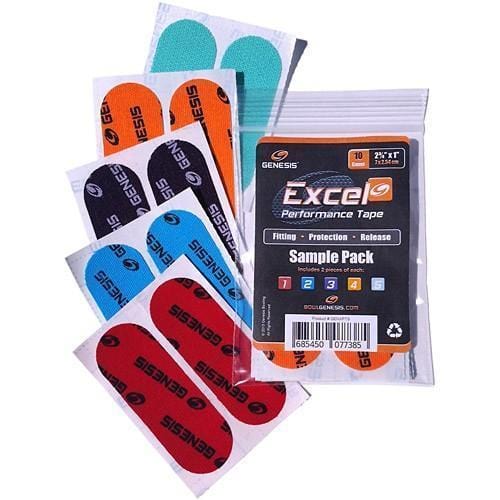
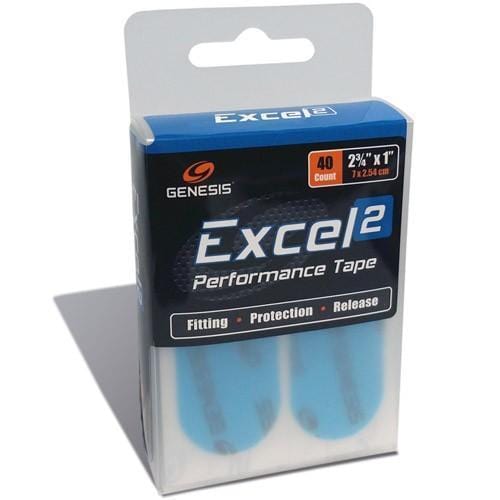
those shots and wasted your effort. Tape is much much cheaper than
playing the wrong shot. If it's cold outside, your thumb is probably
small and you might need to add tape until it swells. If it's hot
and humid, your thumb might be big today. Remember that your thumb
size can change but your thumbhole cannot. The size of the thumbhole
is easily regulated with tape. Since we can never afford to give
shots away and normally your opponent is not going to wait for you
to figure it out, it seems a good plan to put a piece of tape in,
make good shots, get a good read, then if you swell, take the tape
out.
Another important loosen up technique is to put your hand all the
way in the ball and swing it back and forth three or four times.
Your thumb feels one way in a ball not in motion and entirely another
in the swing. Don't let the first time your shoulder feels the weight
of the ball to be when you mean it. Your first shot should be about
¼ speed. By about the 5th or 6th shot you should be up to full speed.
No athlete in any sport starts out at full speed. That's what warming
up is all about, gradually allowing your body to get into the athletics
of your sport. (I've often thought I could have a lucrative part-time
job throwing everyone's first three shots.)
> Put your fingers into the ball first and then your thumb. Putting
your thumb in first will usually have you feeling like the ball
was drilled for someone else! Super tip - Works well for straightening
the ball out for your spare shots.
> Bowling is a sport. You are an athlete involved in this sport
even if you only do it recreationally. Proper stretching and warming
up before you bowl will help prevent injury. There a few stretches
you can do before you ever throw your first ball that will help
prevent injury.
>> Grab your right ankle with your right hand
and pull your foot up behind you until you touch your hip. Now do
the same with your left hand and your left ankle. In addition to
this, some people also stretch differently by grabbing the right
ankle with the left hand and the left ankle with the right hand.
>> Hold on to a seat or table if you need to and
stretch your right leg out behind you keeping your heel on the floor
to stretch your hamstring. Don't bounce and don't try and stretch
until you hurt. Just feel it pull slightly. Repeat with your other
leg.
>> Before you put your wrist brace on, stretch
your arm out in front of you and pull your fingers back keeping
your wrist and elbow straight. Also pull the hand down with your
wrist and elbow straight. This stretches the tendons you'll be using
in bowling and helps loosen them up as well as stretching the wrist.
>> Put your right hand on your left elbow and
push your bent elbow up by your head. Move your upper arm across
your throat and push gently on the elbow toward your back. Repeat
with other arm. This will loosen up your shoulder muscles.
These few stretches take about 30 seconds and can really help prevent
injury. Check with your doctor before you do any stretching exercises,
even these simple ones.
> I see this constantly and wish I didn't see it at all, ever. It
causes so many problems - poor roll, squeezing the ball, killing
the shot, dropping the ball, no backswing, grunting at the foul
line, etc. Unless you are making a rather sophisticated adjustment,
you should always put your thumb completely in the ball. Sometimes
people are afraid of sticking in the ball and don't put their thumb
all the way in. Your hand was measured by your pro shop professional
and your span gauged with your thumb all the way in. If you don't
put it all the way in, you won't be able to free swing the ball,
will have to control it, and the pins always know when your armswing
is tight. I understand that a very common reason for not putting
the thumb all the way in the ball is that you can't because you
are so stretched. That's another article...
> The ball should contact the lane as though it were an airplane
landing. Cramming the ball INTO the lane instead of laying it ONTO
the lane creates a very poor and inconsistent roll besides causing
lane damage. That's why knee bend is so important. You've got to
get your body into a position to lay the ball down. The more upright
you are, the higher the position of the ball for delivery. Banging
the ball on the lane is loud, embarrassing, and kills the roll.
Other than that, it's a good idea.
> Make sure your stance is comfortable and will allow you the easiest
position from which to start your approach. A comfortable athletic
stance includes the knees flexed 4" or so, the spine tilted slightly
forward by moving the hips back, and the ball held close to the
body with your bowling arm never outside of your bowling shoulder.
> There is a big difference between being in control and being in
charge. If you alphabetize your canned goods, you're probably an
over-controller. We've all had bosses who were controllers. You
felt like no matter what you did the scrutiny would be ominous.
You tried to be perfect in everything you did. You checked and rechecked
your work to avoid being wrong and you were always uptight when
your work was being reviewed.
If you've ever had a boss who was in charge, you know the difference.
Your creative juices would flow, your work output was greater, the
quality of your work superior. When the boss reviewed it, the suggestions
for improvement, if any, were just that - suggestions, not criticisms.
In bowling, if you are controlling, you are uptight and your efforts
will fail. You try too hard to be perfect, to look great, to hit
your target exactly. And it never works! But, if you are in charge,
your approach flows, your swing is free and natural, and your accuracy
incredible. Be in charge, not in control!
> Tucking the pinky of your bowling hand to the first knuckle can
cause the ball to hook a little more. When you first try this, it
might feel as if you're going to drop the ball. Keep after it. You'll
learn to do it and find that it gives you an alternative ball reaction.
You might want to wear an adhesive bandage across that knuckle for
a while as a callous might develop. Keep in mind this is an adjustment.
If your ball is hooking too much or too soon, untuck! You also might
want to untuck it on your spare shots.
One caution here about tucking the pinky. With some people, tucking
the pinky can put strain on the ring finger. If you try this and
notice your ring finger beginning to hurt, either have your pro
shop professional shorten the ring finger span very slightly (for
instance, by 16ths until the pain stops) or stop tucking. The added
hook potential is not worth an injury.
> Opening and closing your shoulder can indeed generate more speed
but it certainly can cause some unique problems and complications
to your game as well. If you don't get it closed in time, the ball
is late in the swing. If you close it too early, you'll pull the
ball. It's much easier to just have a 'free' swing and one less
thing to worry about in your timing mechanisms.
> To help keep your wrist firm, try pressing the tip of the index
finger of your bowling hand hard against the ball. This will keep
your wrist firm without tightening up your whole arm.
> Your non-bowling arm is almost as important as your bowling one.
It helps provide balance. Your non-bowling hand and arm come off
the ball at the end of the push off and should go out to the side
of your body to help offset the extra weight you have on the bowling
side of your body. If you don't get that arm out to the side for
balance, you'll tend to fall off the shot. Carolyn Dorin-Ballard,
Walter Ray Williams, and many others have their non-bowling arm
about 90º to their back and the bowling shoulder forward at the
delivery. This is a very powerful delivery platform. See the chapter
on Follow Through for a more in depth explanation of this method.
Another very important component of the non-bowling arm is the position
of the thumb. If your thumb is up at delivery, there could be a
tendency to roll the shoulder forward. It is usually more effective
to have the thumb down. Check which one you do and then try it the
other way. You will find turning the thumb up or down can give you
some options you didn't know you had!
> If you want to get the ball into an earlier roll than normal,
target the dots, which are 7' out on the lane rather than the arrows.
The first time you try this you might feel like these dots are right
in your face by the time you get to the foul line. They're not,
of course, but it is how you feel. Be careful not to allow your
head and torso to go down when learning to look at the dots. Your
head and shoulders must still say up.
Some people have success learning this by pretending they are looking
at their target through the bottom of their glasses (regardless
of whether you wear any or not although it doesn't work very well
if you wear bifocals!) or that they have a glass of water on their
head they cannot spill.
To get more comfortable looking at the dots, try looking a foot
or so in front (closer to you) of the arrows for a few shots. Then
go two more feet and two more feet until you are comfortable looking
at the dots. Although these dots are not on the same boards as the
arrows, they are still great targeting aids and are generally used
when you need to get the ball rolling earlier or when you need to
decrease the distance you put the ball out onto the lane. The dots
are on 3, 5, 8, 11, 14, 26, 29, 32, 35, and 37. So if your target
is the second arrow, you might want to look one right of the fourth
dot. That is, of course, if you are trying to lay the ball down
on 10 and be at 10 at the arrows. If you're trying to swing 10,
you might want to look at the fourth dot. That would put your laydown
point on 11½ or 12. The ball would be on 11 at the dots and 10 at
the arrows, etc.
> It is more important that you practice frequently than that you
practice for long periods of time. Thirty minutes a day will get
you closer to your long-term goals faster than 2½ hours on Sunday.
Take breaks while you practice, at least a minute every ten. Get
a drink or sit down and plan your next few minutes. Just step away
and get a different perspective.
> Practice tasks in segments. Mindless, undirected practice is unproductive.
Never keep score in practice. If you're keeping score, winning matters.
If winning matters, you're not practicing. Have specific goals you
want to accomplish in your practice sessions. Five minutes on the
feel of a good push off, five minutes on follow through and you
don't think about your push off in the follow through time slot.
Your foundation must be built on the bricks of individual components
- strong and linked together with repetition and muscle memory.
You don't want a foundation built on sand that will crumble under
the slightest pressure. |